By Dr Chelsea Brain – IP Commercialisation Manager, Northumbria University – Committed partner in Northern Accelerator
The Entrepreneurs’ Forum Conference never disappoints. Each year, it brings together some of the most driven, creative, and thoughtful minds in the North East — and 2026 was no exception. I always leave the day with fresh energy and feeling inspired. This year was particularly rich, and I wanted to share five reflections that felt especially relevant to the work we do supporting academic entrepreneurs and spinouts across the North East.
1. The founder and the CEO don’t have to be the same person
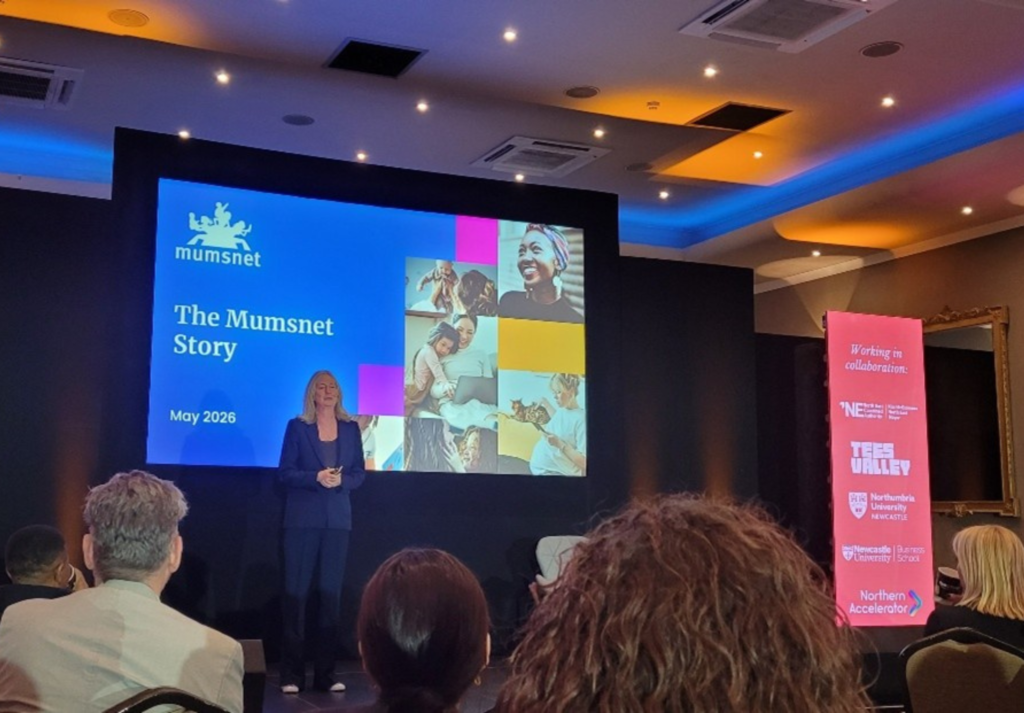
Our opening speaker was Justine Roberts, co-founder of Mumsnet, who delivered one of the most honest and refreshing takes on entrepreneurship I’ve heard in a while. Her message? Building a business around your idea doesn’t automatically make you the right person to lead it at every stage — and recognising that is a strength, not a weakness.
This resonated deeply with me. At Northern Accelerator, we see this dynamic play out regularly with university spinouts. Brilliant researchers — the people who created the IP, who understand the science inside out — don’t always have the commercial and operational experience to scale a business. That’s not a criticism; it’s just the reality of two very different skill sets. It’s exactly why our Executives into Business programme exists: to bring in experienced business leaders who complement the academic founder and help build the kind of leadership team that investors are looking for.
Justine also reminded us that business success involves a degree of luck and risk — but that luck tends to favour those who make quality decisions consistently. Good founders create the conditions for good fortune.
2. Know your customer — and never stop listening to them
Justine’s second big message was about the danger of growing out of touch with your customers. Mumsnet’s agility — converting their entire web forum into a mobile-friendly app in just three weeks by rallying the whole team around a single goal — is the kind of story that makes large organisations wince in recognition.
For early-stage spinouts, this is a particularly timely reminder. Product-market fit was a theme that echoed throughout the day, perhaps most pointedly from Mark Edmundson, founder of Inflo — widely tipped to become the Team Valley’s first ever unicorn company. His message was blunt: until you have it, he said, “you’re kind of fiddling around.” That’s as true for a deep-tech spinout as it is for a consumer platform link Inflo. Getting in front of potential customers early, testing assumptions, and refining your offer is not optional — it’s the work.
3. The North East funding landscape is changing — and our universities are part of that
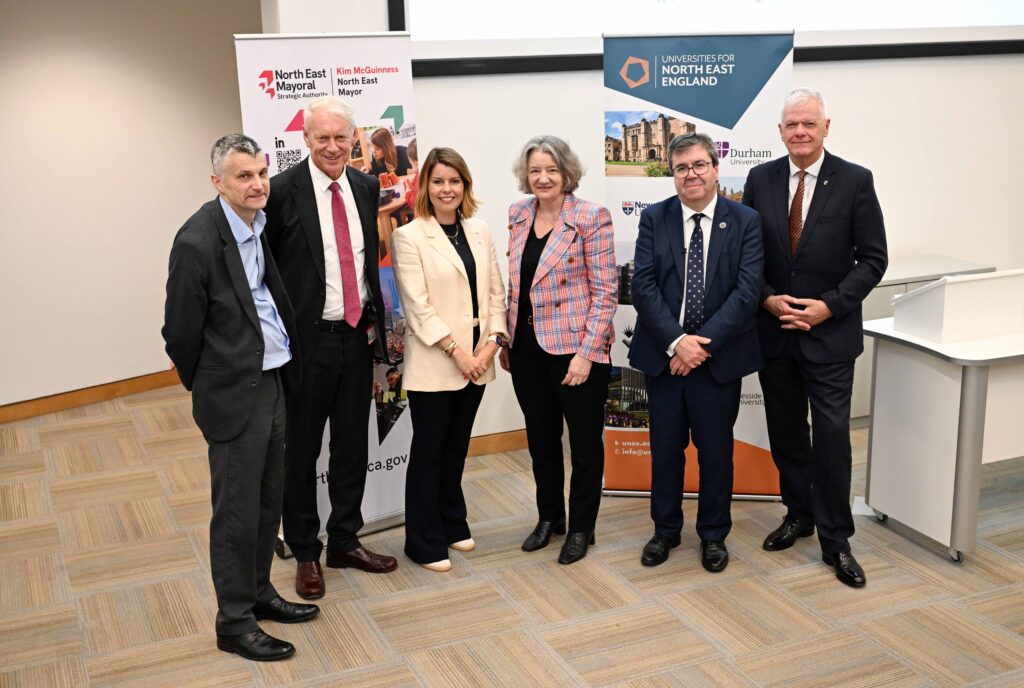
A highlight of the morning was hearing from Kim McGuinness, the North East Mayor, who outlined the investment funds coming online for the region. Particularly exciting for those of us in the university commercialisation space was news of a fund backed by the five North East universities, specifically focused on early-stage funding for university spinouts.
4. Focus is a founder’s superpower
Sir Richard Harpin, founder of HomeServe — which he sold for £4.1 billion in 2023 — brought the kind of perspective that only comes from decades in the entrepreneurial trenches. His most practical piece of advice? Keep a “not to do” list.
Start-ups and early-stage spinouts are pulled in a hundred directions at once. New ideas are exciting. Opportunities seem to multiply. But without ruthless focus, a company can lose momentum on the things that actually matter.
Sir Richard also spoke about the value of mentorship and coaching, particularly in the early CEO years. It’s a reminder of how important it is to surround founders — including academic founders — with experienced advisors who have been through it before.
5. Persistence, uncertainty, and controlling the controllables
The day closed with a talk from Jonathan Broom-Edwards, Paralympic gold medallist in the high jump, whose story of eight years of persistence and setbacks before reaching the Olympic podium was genuinely moving. His framework was simple but powerful: identify what you can control, prepare rigorously for uncertainty, and understand that that preparation is your source of certainty.
For academic entrepreneurs, this framing feels very applicable. The path from research to commercialisation and impact is rarely linear. There are regulatory hurdles, funding gaps, pivots, and setbacks. What separates the spinouts that make it from those that stall is often not the quality of the technology — it’s the resilience of the team and the quality of the support around them.
Final Thoughts
The Entrepreneurs Forum is one of those rare events that manages to be simultaneously inspiring and practical. Thanks in no small part to host Alfie Joey, whose quick wit kept the energy high throughout the day, it was also genuinely fun.
What strikes me every year is how relevant these entrepreneurial conversations are to the world of university commercialisation. The challenges facing academic spinouts — finding the right team, proving product-market fit, securing early funding, staying focused, building resilience — are the same challenges facing every founder in that room. The context is different; the fundamentals are not.
The North East entrepreneurial ecosystem is vibrant, ambitious, and increasingly well-connected. Events like this remind me why I love working in it — and why the work Northern Accelerator does to bridge the world of research and the world of enterprise matters so much.
Here’s to the founders, the researchers, and everyone in between.